


Recent turtle rescue stories remind us just how fragile these ancient mariners can be.
How to rescue tiny turtles
Posted by Mariette on Fri May 22, 2026 in Turtles.
Learn how to lend a helping hand to tiny ocean travellers.
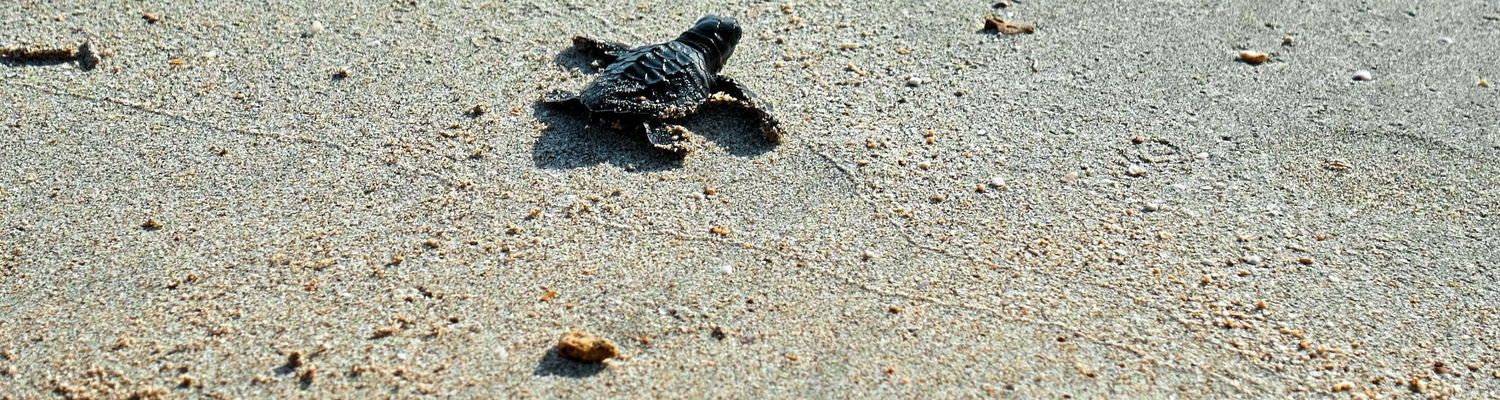
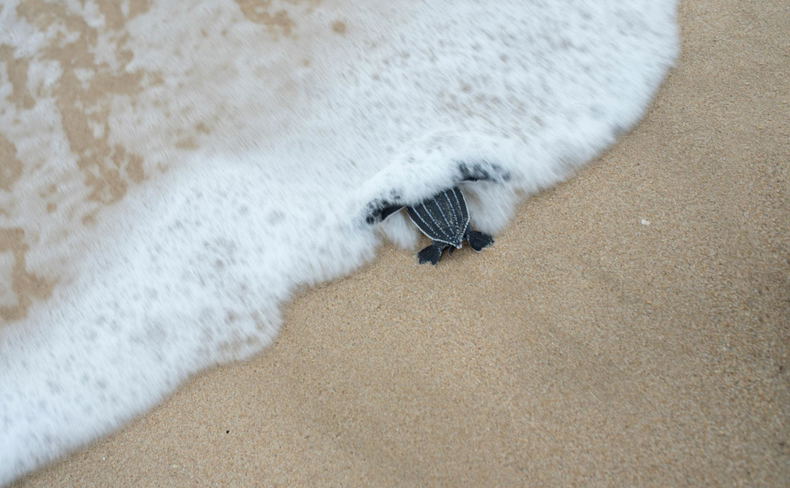
Every year, quiet drama unfolds along South Africa’s coastline after storms and strong winds. Tiny sea turtles—no bigger than a hand—wash ashore exhausted, cold and often close to death. And in those critical moments, their survival can depend entirely on the first person who spots them.
Between February and August, loggerhead and leatherback hatchlings drift south from the warm waters of northern KwaZulu-Natal, swept along by the powerful Agulhas Current. For these miniature mariners, it’s less “Finding Nemo” and more “surviving a marine obstacle course”.
After rough weather and prolonged easterly winds, ocean upwellings can cause sudden drops in sea temperature. The turtles become stunned and weak, washing onto beaches where dehydration, exposure and predators quickly become a threat.
That’s when ordinary beachgoers become unlikely heroes.
“The correct response when finding a stranded hatchling is simple but crucial,” says Strandloper Project founder Mark Dixon.
The rescue protocol is straightforward:
· Gently lift the turtle and support it from underneath.
· Place it in a dry, ventilated box lined with a dry paper towel or facecloth.
· Keep it out of water.
· Contact the Turtle Rescue Network or uShaka Marine World immediately.
And no—despite every instinct telling you otherwise—don’t toss the little fellow back into the sea. A stunned turtle returned to the surf is often just being sent back for another round of punishment.
The Turtle Rescue Network has coordinated countless successful rescues over the years, thanks to strong partnerships between conservation groups, marine NGOs and vigilant members of the public. It’s a reminder that conservation is not always about grand gestures. Sometimes it’s simply about paying attention during a morning beach walk.
But cold water is not the only danger facing these tiny reptiles. Microplastics are emerging as a major killer. According to Dixon, more than 70% of rescued turtles in rehabilitation facilities pass microplastics in their faeces.
The problem is grimly ironic: floating plastic fragments resemble food. Once ingested, the plastic creates a false sense of fullness, leaving the turtles too weak to hunt or survive. The ocean, increasingly, is serving fast food with fatal consequences.
Leatherbacks and loggerheads already face daunting odds from the moment they hatch. Only a tiny fraction survive to adulthood. Add plastic pollution, changing ocean conditions and coastal threats, and every rescued hatchling becomes significant.
That’s why awareness matters. A single informed response from a passerby can mean the difference between rehabilitation and death. It turns an ordinary beach walk into a conservation success story.
So, keep your eyes on the tide line. That odd-looking dark shape in the seaweed may not be driftwood. It may be a tiny traveller that has crossed hundreds of kilometres of ocean and now needs one final helping hand.
TURTLE RESCUE CONTACTS
Turtle Rescue Network Hotline: 083 300 1663
uShaka Marine World
Reference: George Herald
Further Reading
Heart-warming turtle rescues
Fri February 6, 2026
Read This Article
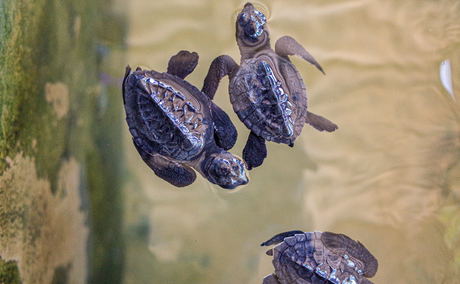
Turtles of Sodwana: Cracking the mystery of the “Lost Years”
Thu September 11, 2025
Read This Article
Next time you see hatchlings scrabbling towards the surf at Sodwana during one of Sodwana Bay Lodge’s famed Turtle Tours from November until March, remember: their story doesn’t end in the waves.
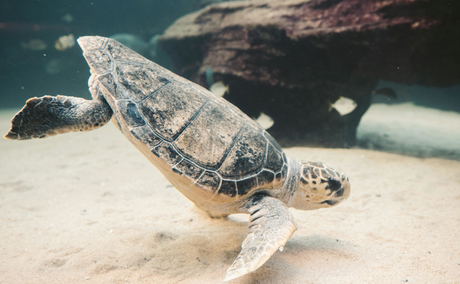
Conserving our ancient mariners
Thu August 28, 2025
Read This Article
For us at Sodwana Bay Lodge, supporting turtle conservation isn’t a marketing slogan—it’s part of living in harmony with the extraordinary place we call home.
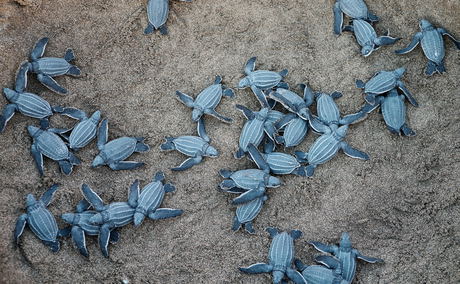
Witness the marvel of turtle nesting
Wed October 9, 2024
Read This Article
Nestled behind the world's highest vegetated sand dunes and just 6 km from the beach, Sodwana Bay Lodge offers an opportunity for nature lovers to witness the remarkable life cycle of two endangered turtle species—the massive leatherback and the smaller, but equally resilient, loggerhead.

Share This Post