

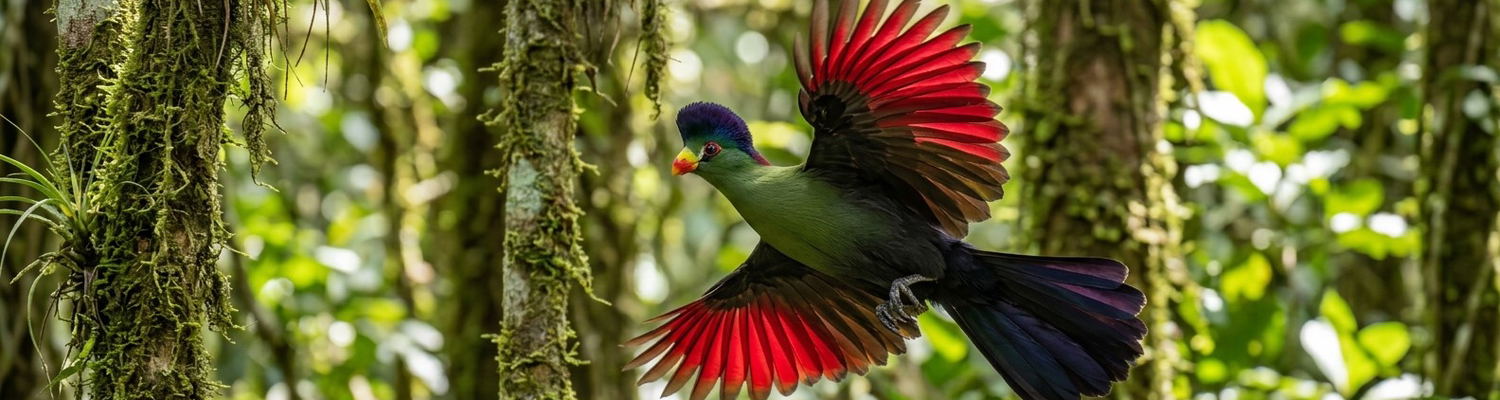


The best soundtrack in the world can be found at Sodwana Bay Lodge, where people and nature get on with the business of living.
Sodwana Bay’s purple-crested dinosaur
Posted by Mariette on Mon August 24, 2026 in Activities.
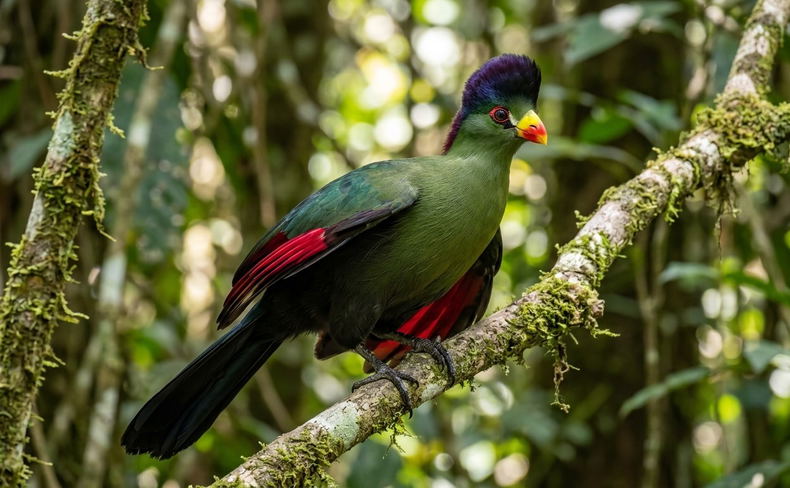
If you've come to Sodwana expecting the usual suspects, prepare to be pleasantly surprised. Meet the Purple-crested Turaco: gloriously colourful, slightly prehistoric, surprisingly agile and apparently unconcerned with whether anyone has seen a bird quite like it before.
Most birds look reasonably well behaved. Turacos, on the other hand, appear to have been designed by someone who was given too much creative freedom. And the Purple-crested Turaco is a particularly splendid example.
One of the special sights on a birding tour at Sodwana Bay Lodge, this striking African endemic is difficult to mistake for anything else. With its purple body, jaunty crest, greenish neck, orange eye-ring and brilliant flash of crimson hidden in its wings, it looks less like a bird and more like a prehistoric creature that has somehow wandered out of Jurassic Park. Fortunately, it eats fruit rather than tourists.
A bird dressed for the occasion
At around 40cm long and weighing roughly 300g, the Purple-crested Turaco is not especially large by bird standards. But it has clearly decided that size is no substitute for flamboyance.
Its plumage is an extraordinary combination of purple, green, brown, red and orange. The purple crest gives it a rather aristocratic air. And then it takes flight. What appears to be a mostly purple bird suddenly reveals brilliant crimson flight feathers. It's the avian equivalent of someone wearing a perfectly respectable suit and then revealing a pair of sequinned trousers. The effect is magnificent.
No songbird
Perhaps the most entertaining thing about a Purple-crested Turaco is the way it moves. These birds spend much of their time in trees, particularly where there are plenty of horizontal branches and fruit-bearing vegetation. Rather than constantly flapping around like some nervous little feathered helicopter, they use their powerful legs to hop, stride and scramble through the canopy with remarkable agility.
Add the upright crest, intense colours and prehistoric-looking movements and you begin to understand why they can look uncannily dinosaur-like.
Then there's the call: a deep, echoing croak or whooping sound that seems entirely too dramatic for a 300-gm fruit eater.
The original banana eaters
Turacos belong to the family Musophagidae, a name derived from Greek words meaning “banana eaters”. It's a really descriptive name, although the subject of this article isn't particularly interested in living up to it. Its menu is primarily fruit, berries, seeds and buds. And therein lies one of its most important jobs. They’re very effective seed dispersers, moving seeds from one part of the forest to another as they feed. In other words, while you're admiring the plumage, the bird is quietly doing essential gardening work.
Unfortunately, the system isn't terribly discerning. Seeds from invasive plants can also receive the five-star treatment, potentially helping unwanted species spread. Nature, as ever, refuses to make things straightforward.
A little purple miracle
The good news is that the Purple-crested Turaco is currently classified as Least Concern, although that doesn't mean it has nothing to worry about. The loss of moist woodland and forest habitat, including the replacement of natural vegetation with plantations that offer little food and few suitable branches, is putting pressure on turaco populations in parts of their range. That makes sightings of these spectacular birds all the more special.
And Sodwana Bay is a particularly rewarding place to look for them. The area's lush vegetation and rich biodiversity create precisely the sort of habitat in which a bird like this can thrive. On a birding tour at Sodwana Bay Lodge, you might hear that unmistakable Jurassic croak before you see anything at all. Then a flash of purple moves through the branches.
The Purple-crested Turaco: gloriously colourful, slightly prehistoric, surprisingly agile and apparently unconcerned with whether anyone has seen a bird quite like it before.
If you've come to Sodwana expecting the usual suspects, prepare to be pleasantly surprised.
Further Reading

Sounds for a better mood
Wed July 8, 2026
Read This Article
Exploration, the civilised way
Wed April 15, 2026
Read This Article
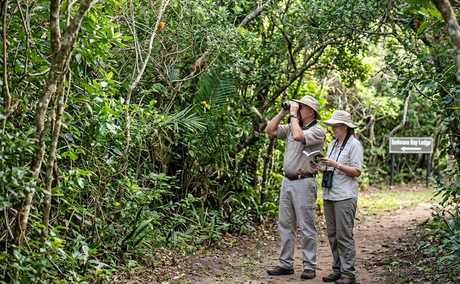
At Sodwana Bay Lodge, “exploration” comes with a comfortable bed, decent coffee and the reassuring knowledge that you can return to civilisation before sunset.
A walk on the wild side
Wed November 19, 2025
Read This Article
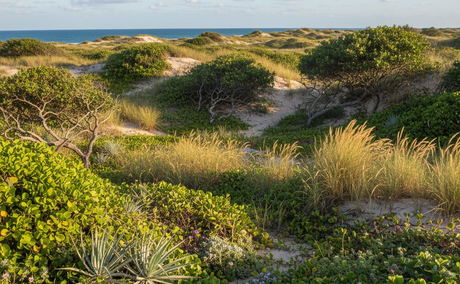
Exploring Sodwana’s living sand hills - some of the most densely vegetated sand dunes on Earth and host to a large variety of plants and animals.
Birding heaven at Sodwana Bay Lodge
Mon June 3, 2024
Read This Article
Avian-rich Sodwana Bay offers birders a true extravaganza.

Choose a destination with adventure
Thu March 21, 2024
Read This Article
One thing Covid has taught us is that life should be filled with adventure. And Sodwana Bay Lodge offers adventures galore.
Share This Post